

Snoring in kids is common enough that it’s easy to dismiss. A stuffy nose, a cold, allergy season: plenty of reasons a child might snore for a night or two. But snoring that sticks around, night after night, can be a sign worth paying closer attention to.
An Occasional Child Snoring vs. a Pattern
“When I talk with parents about snoring, I usually start by saying that an occasional snore is very different from a pattern,” says Dr. Stella. “If a child has a cold, allergies, or temporary congestion and snores for a few nights, that by itself usually isn’t what gets my attention.”
What does get her attention is snoring that shows up consistently. “What makes me want to look a little closer is snoring that happens regularly, especially several nights a week, or when parents tell me, ‘They’ve always been a snorer.'”
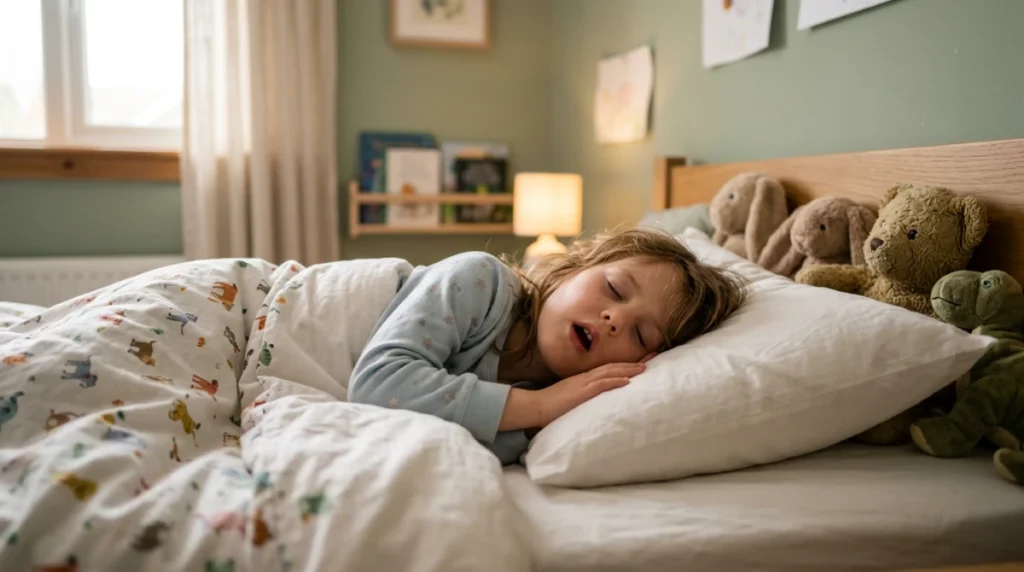
What to Watch Alongside the Snoring
A single symptom rarely tells the whole story. Dr. Stella looks at the bigger picture:
- Mouth breathing
- Tossing and turning
- Sleeping with the neck extended
- Waking up tired
- Pauses or gasping during sleep
- Restless, disrupted sleep overall
“One symptom by itself doesn’t give us a diagnosis,” she explains. “But when snoring becomes a consistent pattern, especially when other signs are present, I think it deserves a closer look rather than assuming it’s just something a child will grow out of.” Some of these same signs come up in our checklist on pediatric sleep apnea, which walks through what to watch for in more detail.
Why It’s Worth Checking
Most children who snore occasionally are fine, and primary snoring on its own isn’t automatically a red flag. But according to the American Academy of Pediatrics, untreated sleep-disordered breathing in children has been linked to daytime sleepiness, behavioral and learning difficulties, slowed growth, and other health effects over time. That’s not meant to alarm anyone. It’s the reason a pattern of regular snoring is worth mentioning at a visit rather than waiting to see if it resolves on its own, especially when it shows up alongside the other signs above.
Airway Health Is a Team Effort
When snoring does turn out to be connected to a physical airway issue, treating it well often means more than one type of provider. Dr. Stella works alongside a network of specialists to look at the full picture:
“I really think of airway health as a team effort. As the orthodontist, I’m looking at things like jaw growth, palate width, the bite, and tongue space. A myofunctional therapist looks more at function, like tongue posture, swallowing, and mouth versus nasal breathing. An ENT can evaluate the tonsils, adenoids, nose, and other upper-airway concerns. Physical therapists can also be helpful when posture or head and neck position are part of the picture.”
“My role is to recognize what I’m seeing, understand where my piece fits, and connect families with the right provider when needed.”
This kind of coordinated care is part of what airway-focused orthodontics at Stellar Orthodontics looks like in practice: not a single fix, but the right specialist for the right part of the problem, including cases involving a narrow palate that may need expansion as part of the plan.
When to Bring It Up With Your Orthodontist in Gilbert, AZ
If your child’s snoring has become a regular pattern rather than an occasional cold-related sound, it’s worth mentioning at your next visit with an orthodontist in Gilbert, AZ. An airway evaluation can help determine whether anything structural is contributing, and whether other specialists should be part of the conversation.
Schedule a free consultation to have your child’s airway and sleep patterns evaluated as part of a comprehensive exam.
This article is for general educational purposes and isn’t a substitute for a full evaluation with your child’s healthcare providers.
Medical reference: American Academy of Pediatrics. Marcus CL, et al. Diagnosis and Management of Childhood Obstructive Sleep Apnea Syndrome. Pediatrics. 2012;130(3):576-584. (The guideline recommends screening all children for snoring as part of routine health visits, with further evaluation for children who snore regularly and show related signs or symptoms.)