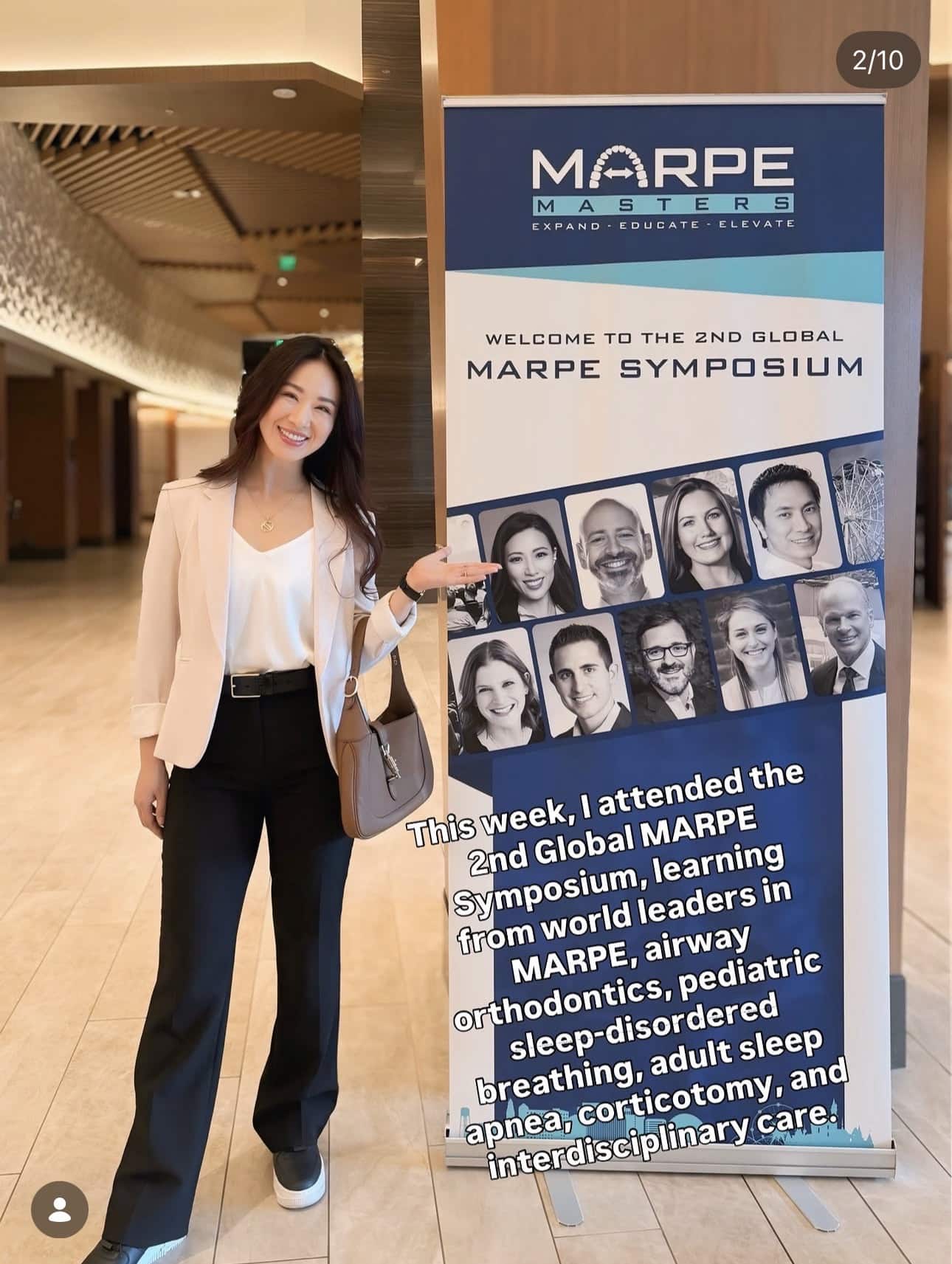

When patients begin researching palatal expansion, they often come across terms like MARPE, MSE, and now MASPE. These names can feel overwhelming, especially when they sound similar but may be used to describe different approaches to widening the upper jaw. If you’re new to this topic, our post on the benefits of palatal expansion is a good place to start.
At Stellar Orthodontics, Dr. Stella believes the most important question is not simply, “Which appliance is being used?” but rather, “What is the safest, most controlled, and most personalized way to expand for this specific patient?”
That is why Dr. Stella commonly favors a slow, customized expansion approach rather than a one-size-fits-all rapid protocol.
What Is MARPE?
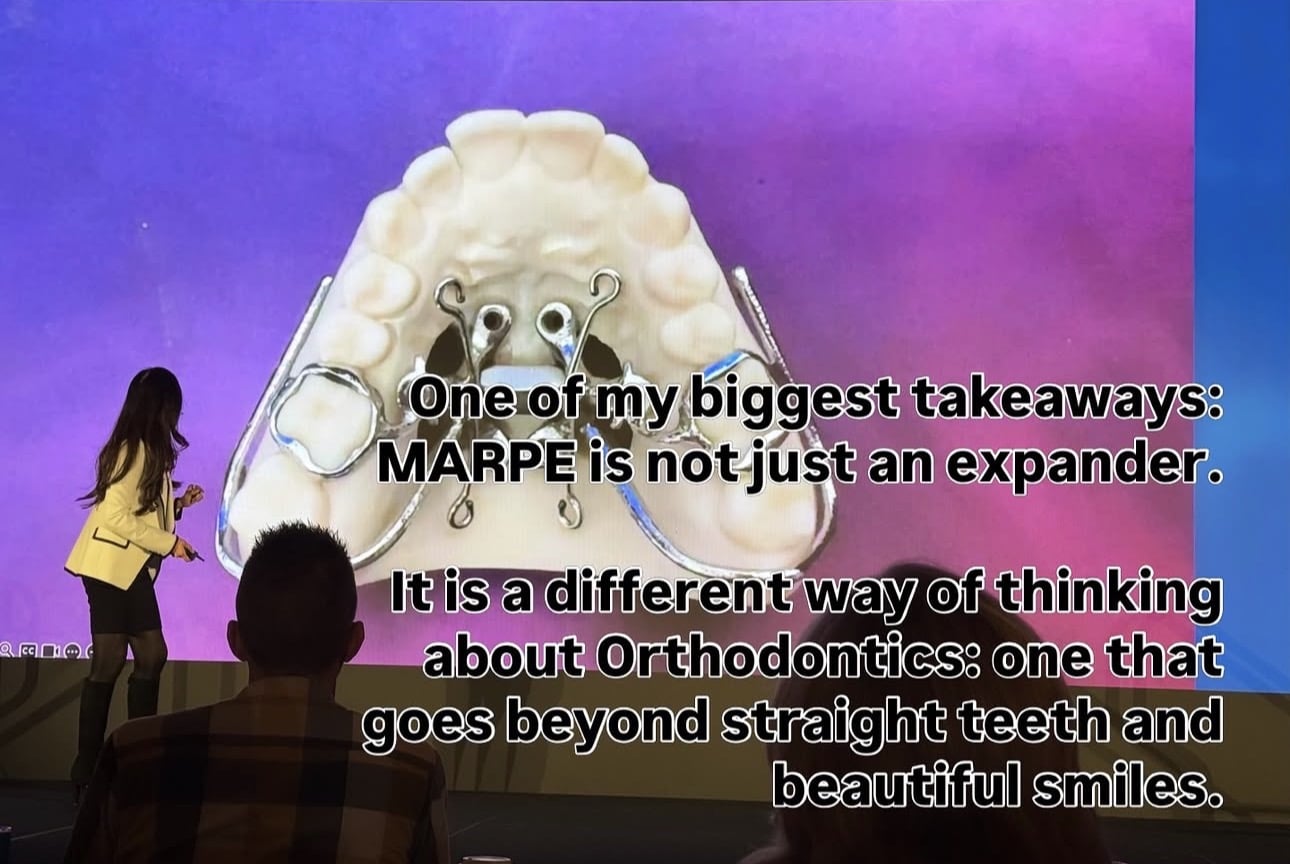
MARPE stands for Miniscrew-Assisted “Rapid” Palatal Expansion. It is an orthodontic technique used to widen the upper jaw, or maxilla, with the help of small temporary anchorage devices, often called mini-screws or micro-implants.
Unlike traditional expanders that rely mostly on the teeth for support, MARPE uses skeletal anchorage to help direct expansion forces closer to the bone. This can make it a helpful option for older teens and adults whose upper jaw sutures are more mature, which is why MARPE is often discussed alongside adult orthodontic treatment. Custom MARPE appliances may also be designed to fit a patient’s unique anatomy more precisely.
Traditionally, the “R” in MARPE stands for rapid, meaning the appliance is activated at a faster pace over a shorter period of time.
What Is MASPE?
MASPE stands for Miniscrew-Assisted Slow Palatal Expansion. In many ways, MASPE uses a similar concept to MARPE: skeletal support through mini-screws or micro-implants to help widen the upper jaw. The key difference is the activation protocol.
Instead of expanding rapidly, MASPE uses a slower, more gradual expansion schedule. Recent orthodontic discussions and studies describe MASPE as a slow mini-implant assisted approach that may be compared with rapid MARPE protocols in adult maxillary expansion.
At Stellar Orthodontics, this slow expansion philosophy aligns closely with how Dr. Stella approaches care: thoughtfully, gently, and based on each patient’s anatomy and response.
MARPE vs. MASPE: What Is the Main Difference?
The biggest difference between MARPE and MASPE is not always the appliance itself. In many cases, the difference is how the appliance is activated.
MARPE is generally associated with a faster activation schedule. MASPE focuses on slower, more gradual activation. Both approaches may use mini-screws to support skeletal expansion, but the pace of expansion can influence the patient experience, the way the body responds, and how carefully the orthodontist can monitor changes over time.
At Stellar Orthodontics, Dr. Stella does not believe every patient should follow the same number of turns, the same schedule, or the same timeline. Instead, she designs a personalized expansion protocol based on the patient’s age, anatomy, growth pattern, airway concerns, bite, bone structure, comfort level, and treatment goals.
Why Dr. Stella Prefers Slow Expansion
Dr. Stella’s preference for slow expansion comes from a simple philosophy: the body often responds best when treatment is controlled, intentional, and customized.
Slow expansion allows Dr. Stella to carefully monitor how the palate, teeth, bite, and surrounding structures are responding. Rather than forcing every patient through the same rapid schedule, she can adjust the pace when needed.
This approach may be especially important for patients with asymmetry, more mature bone, complex airway concerns, or anatomy that requires a more delicate plan.
Benefits of a Slow, Customized Expansion Protocol
1. A More Gentle Patient Experience
Expansion can create mild pressure, soreness, temporary speech changes, and an initial adjustment period. With a slower protocol, many patients find the process feels more manageable because the body has more time to adapt.
While every patient is different, a gradual approach can make treatment feel less abrupt and more controlled.
2. Better Monitoring Throughout Treatment
One of the major advantages of slow expansion is that it gives Dr. Stella more opportunities to evaluate progress along the way.
She can monitor the bite, midline, spacing, gum tissue, appliance fit, comfort, and overall response before making adjustments to the activation schedule. This helps ensure treatment is not just moving forward, but moving forward in the right way.
3. Personalized to Each Patient’s Anatomy
No two palates are exactly alike. Some patients have thicker bone, more mature sutures, narrow arches, asymmetry, airway-related concerns, or limitations in the lower jaw that must be considered.
Dr. Stella carefully evaluates each patient before designing the expansion protocol. The goal is not simply to “make the palate wider.” The goal is to create expansion that supports the patient’s overall orthodontic, facial, functional, and airway goals.
4. More Control Over Asymmetry
Some patients already have facial, dental, or jaw asymmetry before treatment begins. Rapid expansion may not always be ideal for these patients because the orthodontist needs to carefully evaluate how the two sides are responding.
A slower protocol gives Dr. Stella more control and flexibility. If one side appears to be responding differently, she can adjust the plan instead of continuing with a rigid activation schedule.
5. A Thoughtful Airway-Focused Approach
At Stellar Orthodontics, expansion is often discussed in the context of airway-focused orthodontics. The roof of the mouth is also the floor of the nose, so maxillary development can play an important role in nasal breathing, tongue posture, and overall oral function.
That does not mean expansion is the right answer for every patient, and it does not mean every airway concern can be solved with an expander. It does mean that Dr. Stella looks at the bigger picture: the bite, the jaw, the airway, sleep-related symptoms, oral habits, and long-term growth or stability. You can read more about this broader philosophy in Beyond Straight Teeth: How MARPE and Airway-Focused Orthodontics Are Changing the Conversation.
Why “Custom” Matters
A customized expander and a customized protocol are not the same thing, but both matter.
A custom appliance is designed around the patient’s anatomy. A custom protocol is the activation plan Dr. Stella creates for that specific patient. This includes how often the expander is turned, how quickly changes are made, when to pause, when to evaluate, and how to adjust based on the patient’s response.
At Stellar Orthodontics, Dr. Stella does not simply hand every patient the same instructions. She designs each expansion plan intentionally and modifies it when needed.
Common Questions About MARPE
Patients researching this treatment often have similar questions before their first visit:
Does MARPE hurt?
Most patients feel pressure rather than sharp pain, especially with a slower activation schedule. Some mild soreness in the first few days is normal and typically eases as the body adjusts.
How long does MARPE take?
Treatment length depends on how much expansion is needed and the pace of the protocol Dr. Stella designs. A slower, MASPE-style schedule generally takes longer than a rapid protocol, but is often more comfortable and easier to monitor.
Is MARPE covered by insurance?
Coverage varies by plan and by case. During a consultation, Dr. Stella’s team can review your specific benefits and walk you through financing options if needed.
Is MASPE Better Than MARPE?
The answer depends on the patient.
Rather than labeling one option as universally better, Dr. Stella focuses on choosing the right approach for the individual patient. In her hands, expansion is not just about the appliance. It is about diagnosis, design, timing, activation, monitoring, and personalized care.
Dr. Stella’s Approach at Stellar Orthodontics
Dr. Stella’s expansion philosophy is centered on precision, personalization, and respect for the body’s natural response.
At Stellar Orthodontics, every expansion plan is thoughtfully designed. Dr. Stella evaluates each patient’s records, bite, airway concerns, skeletal structure, growth pattern, and treatment goals before recommending an approach. If expansion is appropriate, she creates a customized protocol rather than relying on a generic schedule.
For many patients, this means choosing a slower expansion approach designed to be more controlled, comfortable, and responsive to the individual.
The Bottom Line
MARPE and MASPE are closely related, but the difference comes down to the pace and philosophy of expansion.
MARPE is commonly associated with rapid activation. MASPE focuses on slow, controlled, miniscrew-assisted expansion. At Stellar Orthodontics, Dr. Stella often prefers slow expansion because it allows her to customize the process, monitor the patient carefully, and adjust the protocol based on how the body responds.
When it comes to palatal expansion, faster is not always better. The best approach is the one that is carefully designed for you.
If you are curious whether palatal expansion may be right for you or your child, Stellar Orthodontics would be happy to evaluate your smile, bite, airway, and growth pattern during a consultation.